The anticipation of Chinese New Year and the start of the year of the Dragon in 2024 offers a unique lens through which to view the Chinese economy. The significance of this period, deeply rooted in cultural and economic symbolism, can't be overstated, especially for us at Sharpe Two, who have experienced it firsthand during our 5 years stint in Asia.
However, we understand the skepticism; relying solely on zodiac signs for market confidence isn't our style either.
Fund managers and institutional players are also treading carefully, especially after the poor performance over the past two years, and are willing to pay extra when it comes to insuring Chinese stocks.
As a result, FXI, an ETF tracking Chinese equities, has seen its insurance costs spike, highlighting market apprehensions. But where there's caution, there's also opportunity—particularly for those looking to sell volatility.
Let's dive deeper.
Since its peak in Jan 2021, FXI has lost 50% of its value.
The volatility levels we're observing now aren't reaching the dizzying heights seen during the early stages of COVID or the speculation period before China's reopening at the end of 2022. Excluding those exceptional periods, realized volatility for Chinese equities remains on the higher end of its usual spectrum.
This sustained volatility likely means that the premiums demanded by volatility sellers to provide coverage for fund managers are on the rise.
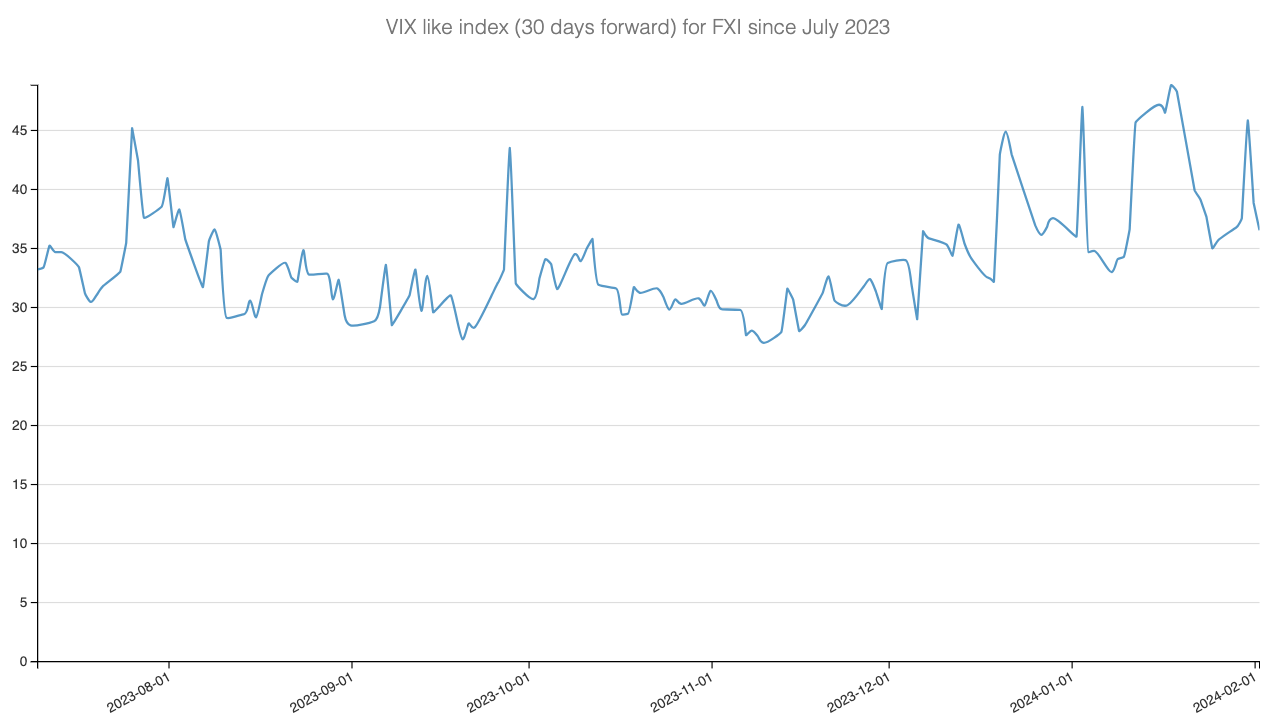
A look at a VIX-like index specifically constructed for FXI indicates a gradual decline from earlier peaks this year. Nevertheless, the cost of volatility remains relatively elevated, suggesting that opportunities for profitable trades might still be within reach.
Now, let's explore potential strategies to take advantage of the current volatility landscape in FXI.
The Signals and the Trade Methodology
As we dive into the analysis, a key focus will be on the Variance Risk Premium (VRP) for FXI, defined as the ratio between the 1-month implied volatility and the actual movement in the underlying. A high VRP typically signals lucrative opportunities for option sellers.
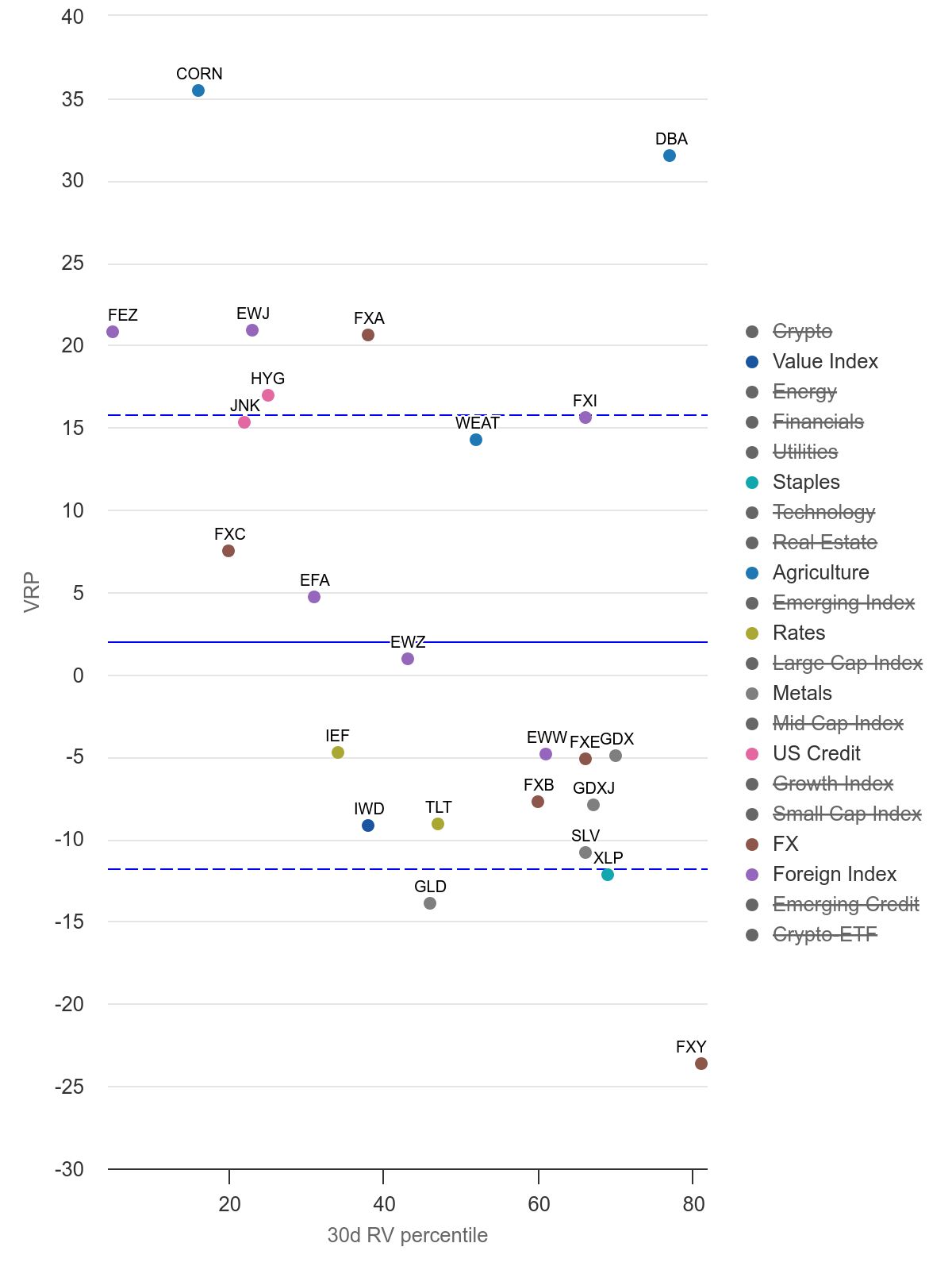
Data from Moontower.ai illustrates that both the VRP and realized volatility in FXI are currently elevated. This context suggests that we might anticipate a reduction in realized volatility, given its tendency to mean-revert. Such a scenario could present favorable conditions for those looking to sell options.